




Auctions in October in London


Auction Houses & Fairs
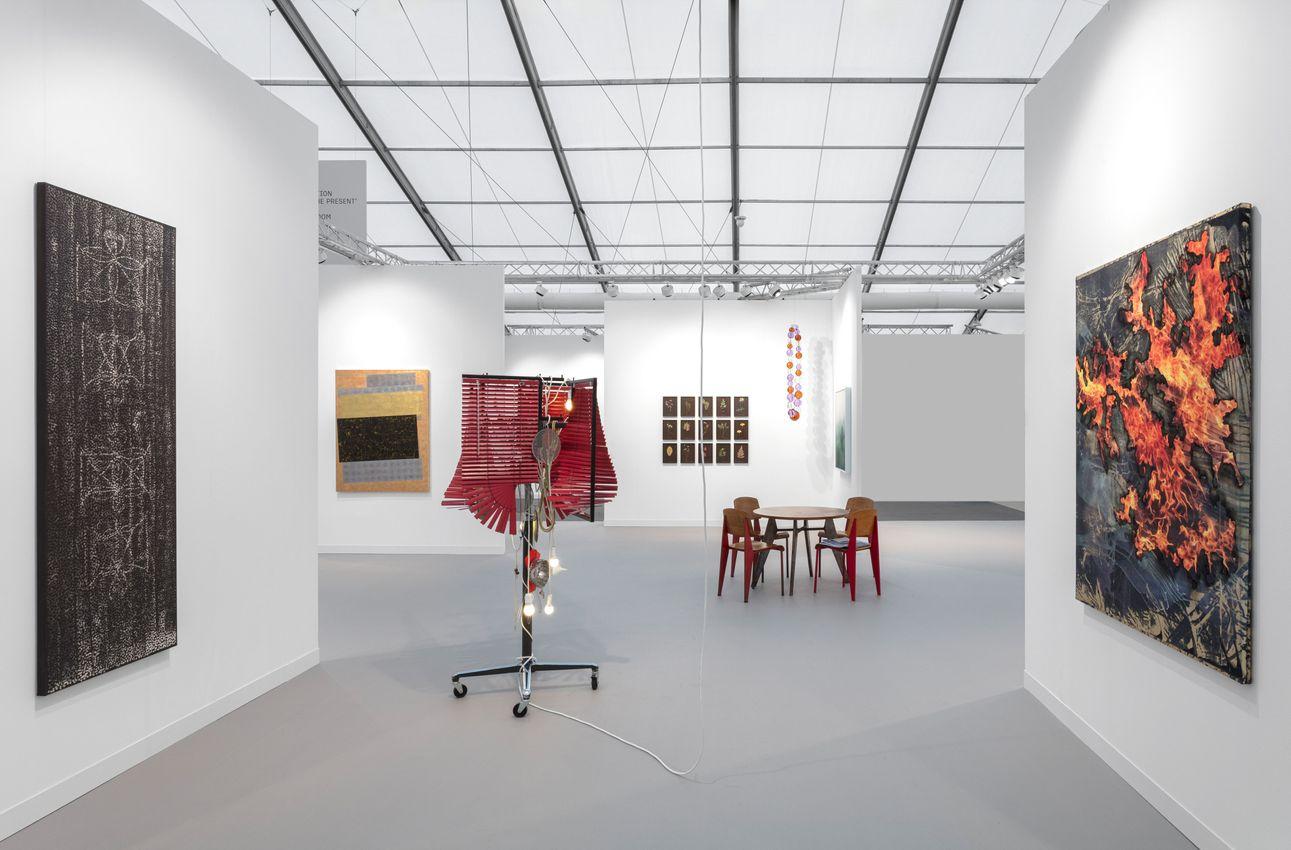
Frieze London & Frieze Masters
- Two tents divide contemporary work from historical material, making the shift in pace immediately clear.
- The 2026 edition runs 14–18 October. The free sculpture trail opens earlier and remains after the tents close.
- The walk between tents takes longer than the map suggests, making separate half-day visits the wiser approach.
- Neither fair rewards trying to see everything. Picking two or three sections at each and moving with intent covers more ground than an unplanned lap of either tent.
Great for:
Market breadth, Fair comparison, First-time visitors.

Begin in the historical tent before noon, when the pace is slower and the material rewards closer attention.
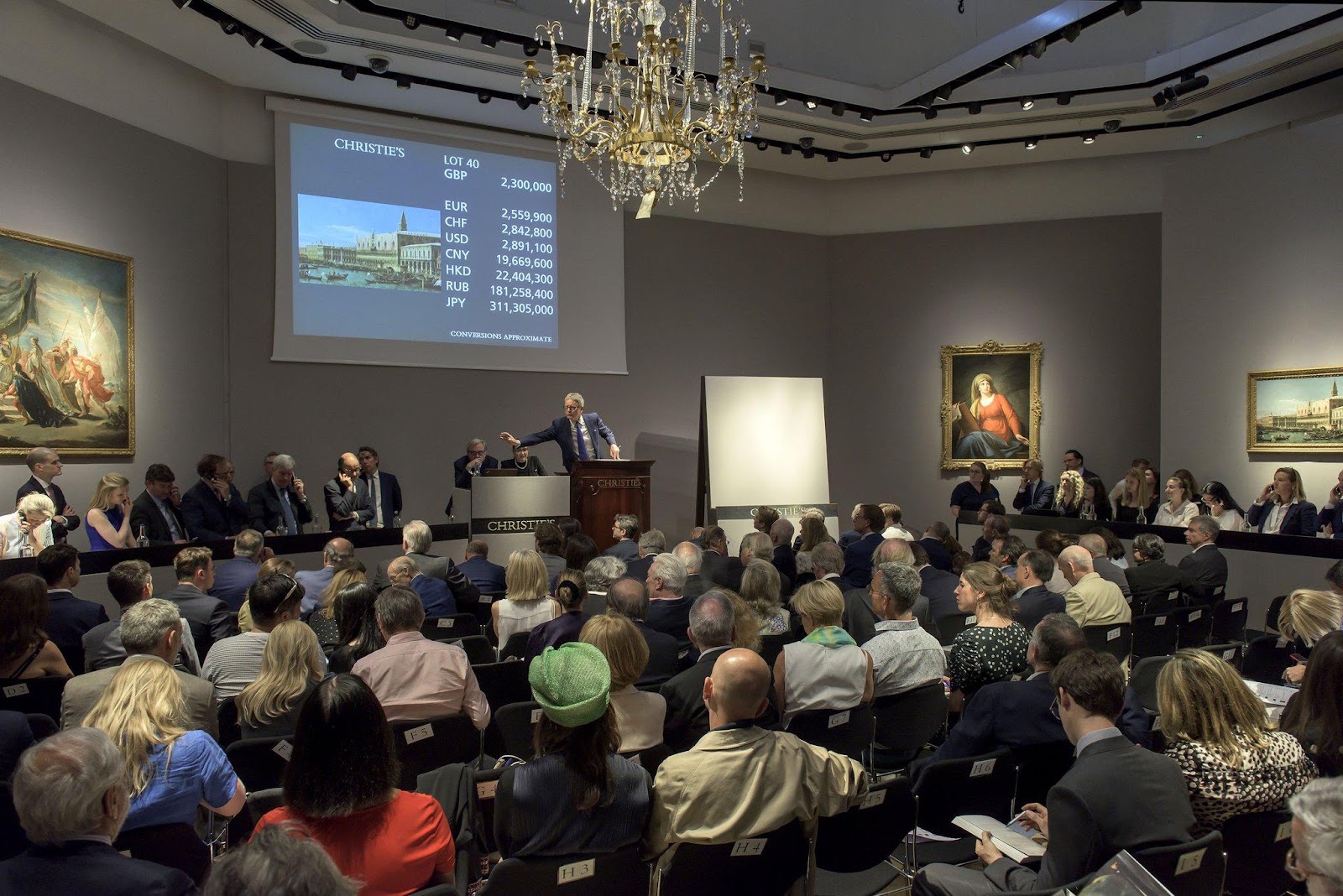
Christie’s
- King Street times its Modern, post-war and contemporary previews around Frieze, when the fair and auction audiences overlap.
- Public pre-sale exhibitions require neither tickets nor appointments, offering a calm counterpart to Regent’s Park.
- St James’s keeps its own register: private clubs and wine merchants in place of Mayfair’s retail bustle.
Great for:
Evening previews, Historic works, Free access.
Visit later in the preview run, when the headline lots remain on view and the opening-day crowd has passed.
Sotheby’s
- The October programme leans into contemporary and ultra-contemporary work, meeting the same international collector traffic as the fairs.
- The Bond Street building runs its own restaurant and café, both open to the public, useful for turning a viewing into an actual stop rather than a walk-through.
- Ground-floor windows frame the headline lot, while upper galleries often hold smaller thematic displays worth seeing separately.
Great for:
Contemporary art, Design collectors, Berkeley Square.
Check the upper floors, where smaller displays are easily missed between fair sessions.
Phillips
- The youngest house provides the week’s contemporary counterpoint in smaller, gallery-like rooms.
- Berkeley Square’s rooms are smaller and more informal than King Street or New Bond Street, closer to a gallery visit than an institutional one.
- Five minutes’ walk from both Claridge’s and the Connaught, making it the easiest of the three houses to fold into an afternoon already built around Mayfair.
Great for:
Smaller previews, Emerging names, Fair-week calm.
Pair the viewing with coffee and ten quiet minutes in Berkeley Square.
Hotels
The London EDITION
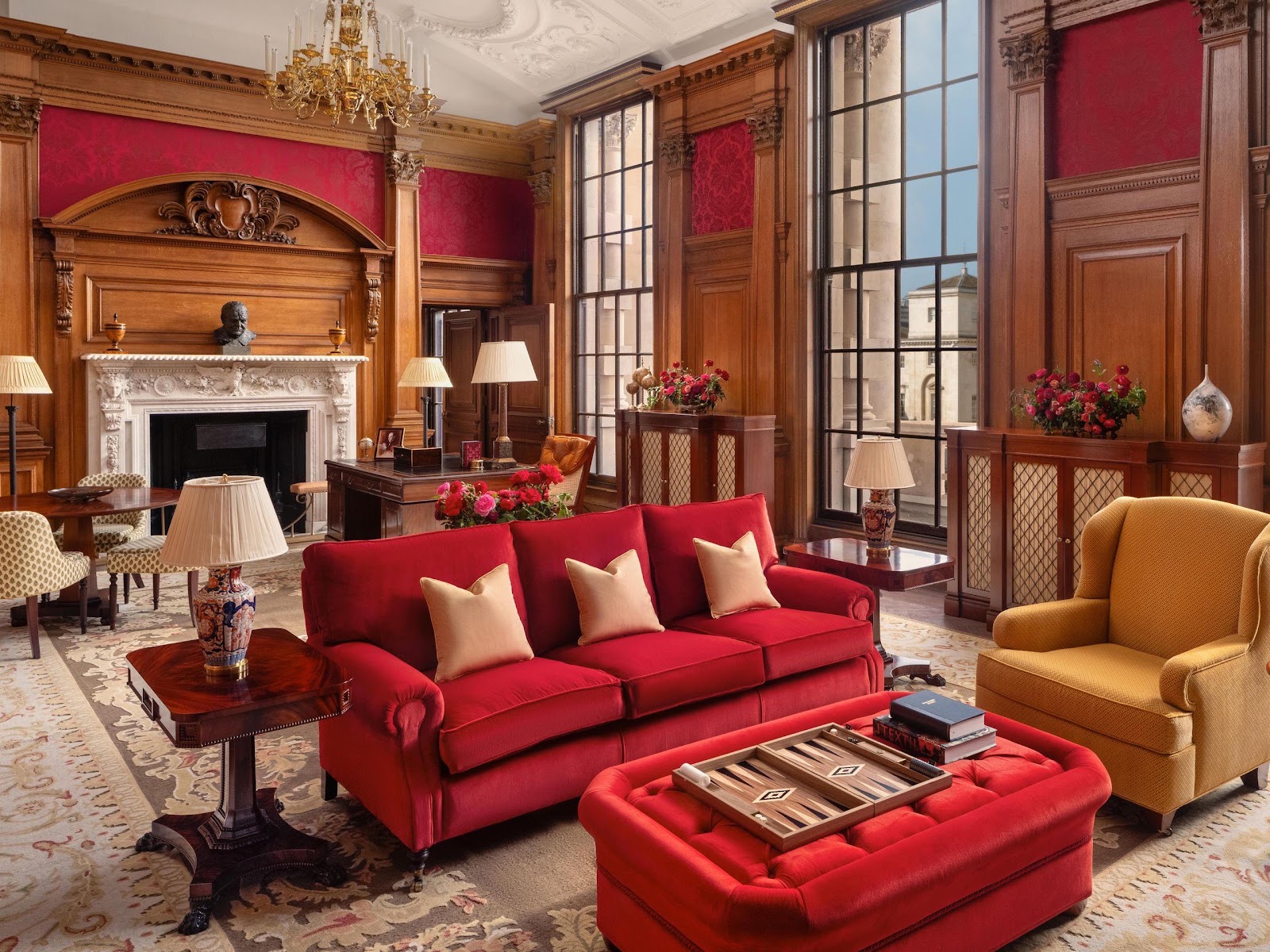
- An Ian Schrager hotel inside a restored Fitzrovia landmark, pairing grand historic rooms with a distinctly social modern rhythm.
- Berners Tavern and the lobby suit Frieze meetings without returning to Mayfair between Regent’s Park and evening previews.
- Berners Street puts Fitzrovia dining close at hand, with Regent’s Park and New Bond Street each a short cab ride away.
Great for:
Frieze routes, Fitzrovia dinners, Lively evenings.
Choose a higher floor when the lobby’s Frieze-week energy matters less than a quiet night.
The BoTree Hotel
- A contemporary Marylebone hotel with bold interiors, generous rooms and Bond Street station almost outside the door.
- Marylebone Lane places Lita, The Wallace Collection and Regent’s Park routes closer than a traditional Mayfair base.
- Floor hosts and Lavo downstairs make late changes and informal meetings easy during the fair.
Great for:
Marylebone access, Spacious rooms, Fair-week meetings.
Choose Marylebone Lane for neighbourhood character or a higher floor for quieter sleep.
The Twenty Two
- 2 Michelin Keys
- An intimate 31-room hotel and members’ club in a listed Grosvenor Square townhouse, with a younger pulse than Mayfair’s grand hotels.
- French-inspired interiors and the all-day restaurant suit collectors who prefer a residential base that becomes more animated after dark.
- Phillips at Berkeley Square and the New Bond Street auction houses are both within an easy walk.
Great for:
Grosvenor Square, Social evenings, Intimate scale.
Request a Grosvenor Square-facing room when the view matters more than the club’s late-night energy.
Restaurants
Kitchen Table
- 2 Michelin Stars
- A nineteen-seat chef’s counter built around fire, British produce and a tasting menu served directly from the open kitchen.
- Every seat faces the working kitchen, turning preparation and service into part of the tasting sequence.
- The menu follows that week’s produce, allowing the sequence to change from one visit to the next.
Great for:
Counter dining, Tasting menus, Post-fair dinners.


Order: The daily tasting menu, with single-ingredient courses such as oyster, scallop, truffle and deer.
Book weeks ahead specifically for Frieze week, when the fair’s international crowd fills every seat in the neighbourhood.
Hélène Darroze at The Connaught
- 3 Michelin Stars
- A refined hotel dining room translating Basque and south-west French flavours into a highly personal tasting menu.
- Close enough to Berkeley Square and New Bond Street to fold a Phillips or Sotheby’s viewing directly into a dinner reservation the same evening.
- The room stays formal without feeling stiff, closer to an occasion dinner than a hotel restaurant in the usual sense.
Great for:
Formal dining, Basque flavours, Mayfair evenings.
Order: Cornish squid, John Dory, signature baba.
Lunch tasting menus are considerably easier to book than dinner, useful on a day already built around evening-sale previews.
Lita
- 1 Michelin Star
- A Michelin-starred Marylebone restaurant built around Mediterranean sharing dishes and cooking over open fire.
- Paddington Street makes it a useful lunch stop between Regent’s Park and the Bond Street auction-house previews.
- The open dining room keeps the meal convivial, with whole fish and larger cuts giving the table its centre of gravity.
Great for:
Marylebone lunches, Open-fire cooking, Sharing dishes.
Order: Smoked Basque sardine, duck-ragù strozzapreti, whole Cornish turbot.
Make the turbot the table’s main event; at 1.2–1.4kg, it is a sharing order, so keep the starters light.
Sessions Arts Club
- A restaurant, art and performance space occupying the former judges’ dining room at Clerkenwell’s Sessions House.
- Terraces and fireplaces give the historic room a slower rhythm than the central fair-and-auction circuit.
- The changing menu keeps autumn produce in focus, making this a dinner to build an evening around rather than squeeze between viewings.
Great for:
Art-led evenings, Seasonal cooking, Clerkenwell dinners.
Order: Mussels with rouille, truffle with pecorino and pepper, rice pudding with damson, when on the changing menu.
Keep calls to the stairwell and your phone silent at the table; the restaurant asks guests to preserve the room’s quiet.
One Club Row
- A first-floor Shoreditch bistro above the Knave of Clubs, taking its cues from New York taverns and Parisian dining rooms.
- The counter brings the room’s conversation close, while the menu favours familiar dishes with a little irreverence.
- Martinis, steak tartare and the cheeseburger au poivre make a relaxed finish after a day of auction previews.
- Plan it for an evening already heading east; Club Row sits beyond the guide’s Mayfair and Regent’s Park circuit.
Great for:
Counter dinners, Post-preview drinks, Shoreditch evenings.
Order: Pickled jalapeño gougères, cheeseburger au poivre, rice pudding crème brûlée.
Arrive through the Knave of Clubs and ask for the restaurant; the team takes you upstairs by the tucked-away stairway.
The Wigmore
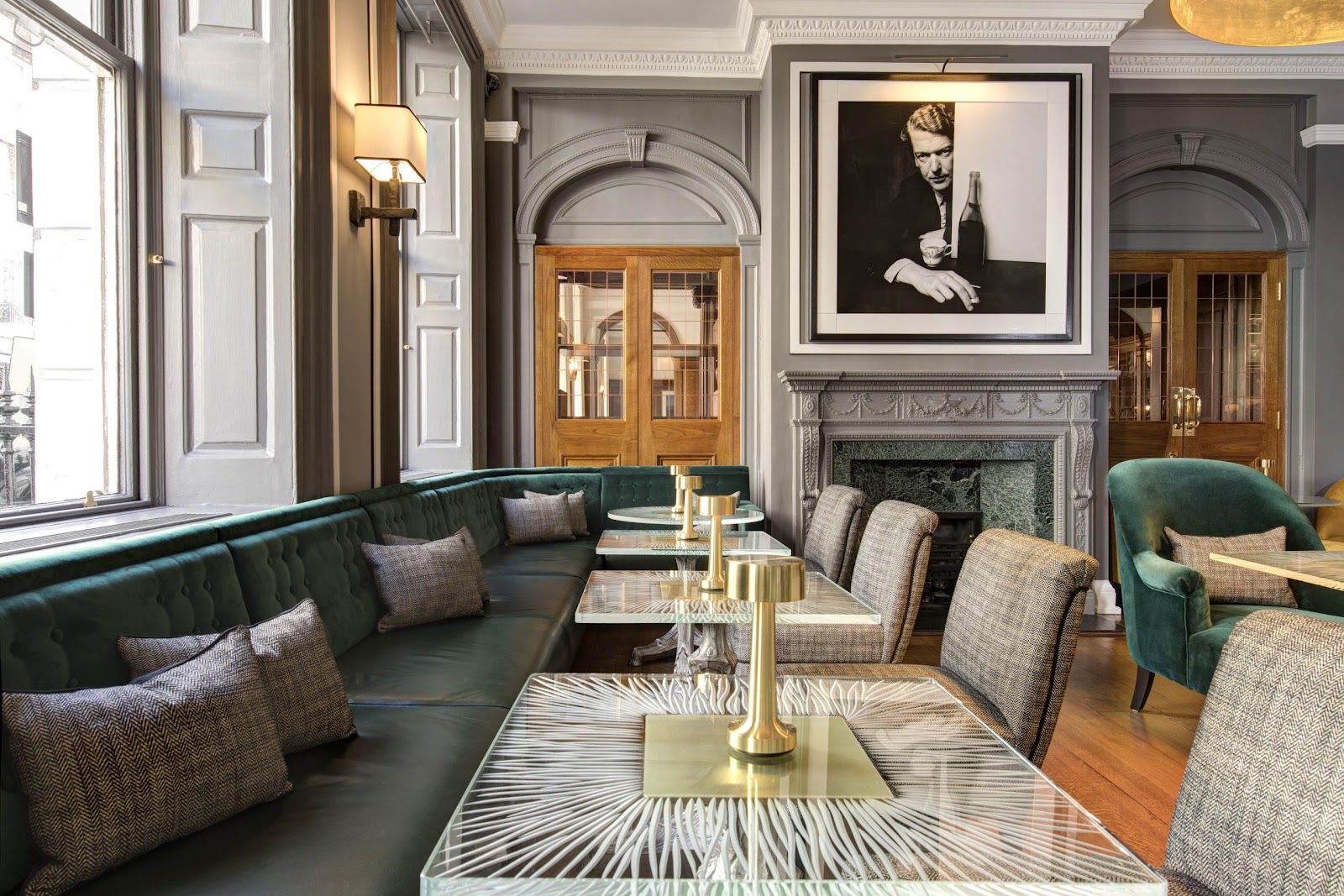
- A polished modern tavern serving British comfort food in a room made for an easy post-fair supper.
- Green leather, timber and high ceilings create the ease of a handsome public house.
- British snacks, pies and an excellent cheese toastie suit appetites shaped by a long fair day.
- The mixed crowd keeps dinner convivial when art-week rooms elsewhere feel performative.
Great for:
Post-Fair Supper, British Tavern, Easy Conversation.
Order: Masala-spiced Scotch egg, XXL stovetop cheese toastie, sticky toffee pudding.
Use the bar for a spontaneous late meal when fixed plans collapse after the fair.
Great Cafés
The Wallace Restaurant & Café
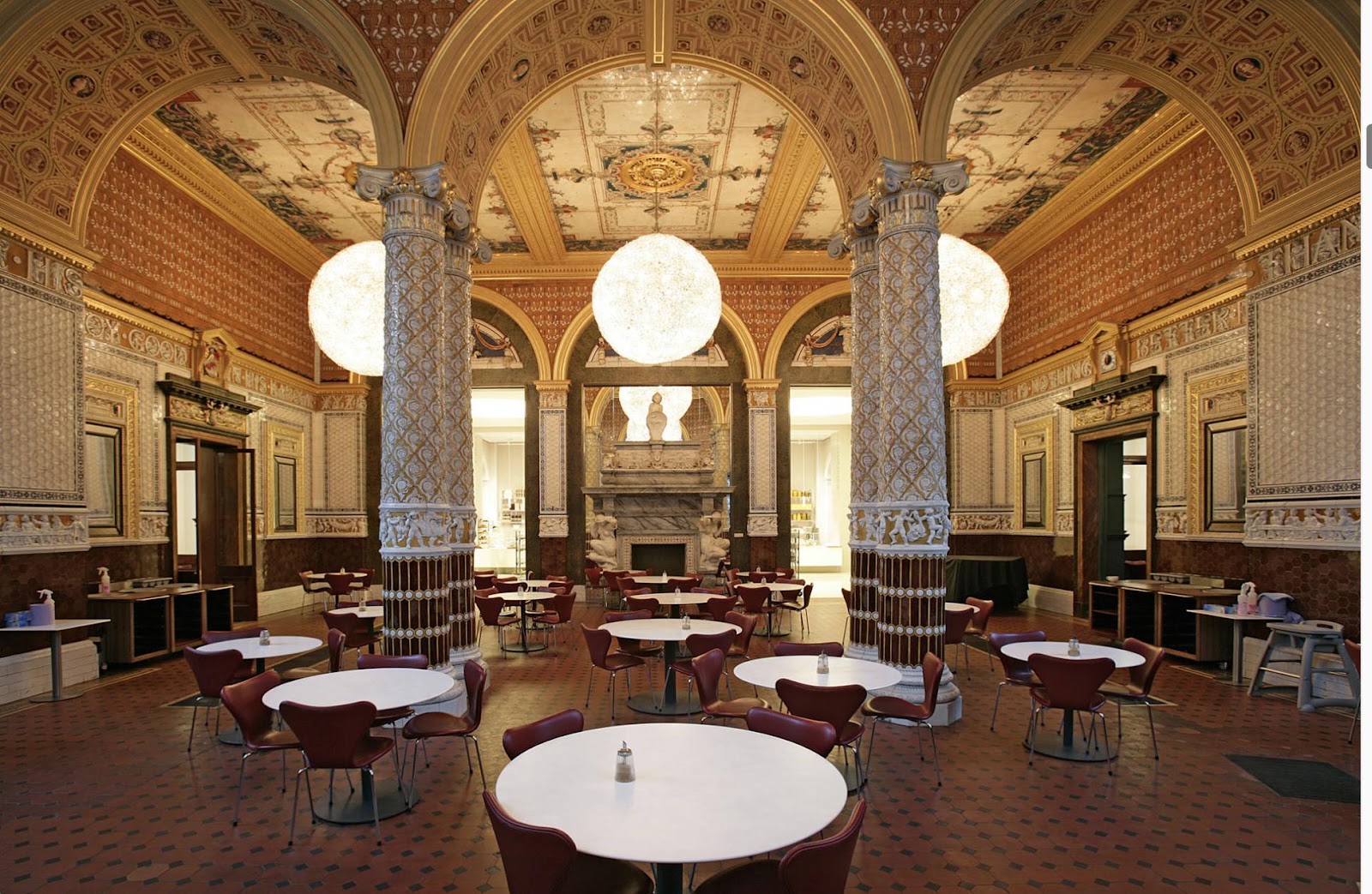
- The glazed courtyard offers a quieter reset between Regent’s Park and Mayfair, with the museum collection immediately above.
- Coffee, lunch and afternoon tea make it flexible enough for an uncertain fair-day schedule.
- The surrounding collection of painting, porcelain and armour changes the register after hours of temporary booths.
Great for:
Museum breaks, Marylebone lunches, Frieze routes.
Order: Afternoon tea, truffled egg-mayonnaise brioche, plain and fruit scones.
Arrive before midday, then give one upstairs gallery twenty minutes rather than attempting the whole museum.
Storyline Café
- A small public café inside Sotheby’s makes it easy to combine coffee with one last pass through the preview.
- The compact room carries more fair-week conversation than a conventional Bond Street counter.
- Its value lies in speed, especially when the auction houses sit between two Regent’s Park visits.
Great for:
Preview breaks, Fast coffee, Auction-world texture.
Order: House coffee, daily pastry, seasonal sandwich.
Go around 3pm, after lunch and before nearby offices release their evening crowd.
Walk-ins only
Monocle Café
- The magazine’s small café brings a Tokyo-influenced calm to Chiltern Street without hotel formality.
- Coffee and Japanese snacks suit a purposeful stop rather than a long working session.
- The address sits within walking distance of Frieze Masters while feeling removed from the fair’s temporary machinery.
Great for:
Quiet espresso, Design readers, Masters mornings.
Order: Flat white, shrimp-katsu sandwich, cardamom bun.
Visit before the fair opens, when the room belongs to Chiltern Street regulars and seating is easiest.
Walk-ins only
Claridge’s ArtSpace Café
- The gallery café behind the hotel provides breathing room from fair week without leaving its central circuit.
- John Pawson’s restrained interior and precise pastries keep the experience focused.
- Breakfast draws a design-conscious local crowd before preview appointments begin.
Great for:
Gallery coffee, Early breakfasts, Mayfair resets.
Order: Seafood cocktail crêpe, Mega Mayfair Madeleine, seasonal pâtisserie.
Arrive at opening, when both the café and adjoining exhibition are at their calmest.
Walk-ins only
Things To Do
Cork Street Galleries
- Cork Street combines Frieze’s permanent gallery space with independent dealers timing new exhibitions for fair week.
- Free to walk, and considerably less crowded than either fair tent, useful as a lower-key alternative on a day when the fairs themselves feel like too much.
- Several galleries stay open later than usual during the week specifically, so an evening walk after the fairs close is a genuine option.
Great for:
Public galleries, Mayfair walks, Free exhibitions.
Check each gallery’s evening hours, as some dealers close to install rather than extend opening.
Mount Street
- Mount Street mixes fashion flagships with design and decorative-arts dealers whose stock remains on view year-round.
- Close enough to Phillips and the Connaught to fold into an afternoon already built around a saleroom viewing.
- Considerably quieter than Bond Street, useful for a slower browse once the fairs and salerooms start to blur together.
Great for:
Georgian London, Quiet streets, Gallery breaks.
Call ahead for a specific artist, as several dealers become appointment-led during Frieze week.
The Wallace Collection
- A free national museum of arms, Old Masters and French decorative art, displayed inside a townhouse rather than a purpose-built gallery.
- A genuine change of pace from either fair tent, and close enough to Regent’s Park to fit into a Frieze Masters morning.
- Considerably quieter than the National Gallery or the Wallace’s more famous neighbours, even during the busiest week of the London art calendar.
Great for:
Public art, Park walks, Unhurried viewing.
The Fragonard room is easy to walk past quickly, slow down for it specifically.
Must-See Experiences
Frieze Sculpture
- The free outdoor display extends the week beyond ticketed tents and appointment-led rooms.
- Early morning gives the works space before runners, school groups and fair traffic gather.
- Walking the Broadwalk towards the next fair turns sculpture into the route rather than an additional stop.
Great for:
Public art, Quiet mornings, Park transitions.
Begin nearest your first fair entrance so the final work leads directly to the queue.